

I left the holy rollers for the frozen chosen. That still feels strange to say, not because I despise my Pentecostal upbringing, but because I do not. Pentecostalism is where I learned about Jesus, faith, and the Bible. My small rural church made sure we knew Scripture about as well as any child could by the time we reached adolescence. It is where I first experienced God, where I felt called to ministry, where I learned to preach, and where I eventually spent decades building a life around the church. It gave me community, friendships, language, structure, confidence, and a sense that God was not dead or distant, but alive, active, and involved in the world. I could never tell the whole story of what Pentecostalism gave me in one article because too much of who I became was formed there.

At the same time, leaving gave me enough distance to see things I could not always see while I was still inside of it. Some of the things I now consider red flags bothered me even then. They bothered many of us. Pentecostal pastors regularly warned against emotionalism, false prophecy, spiritual manipulation, celebrity preachers, and confusing noise with the presence of God. We knew those dangers existed, and we talked about them often. The problem is that we usually went right back to creating the same environment where those problems flourished. So I am not writing this as someone who believes every Pentecostal experience is fake, because I do not believe that. Some of the most meaningful spiritual experiences of my life happened in Pentecostal churches. I am writing as someone who participated in the system, defended it, preached inside of it, and now sees things differently than I did before.
1. We learned to use emotion as evidence that God was present.
The point of a Pentecostal church service was to encounter God. That is not unusual in Christianity. Christians have always gathered expecting to encounter God through prayer, Scripture, preaching, sacrament, music, silence, architecture, community, and countless other practices. Pentecostals, though, expect that encounter to manifest itself physically or emotionally. Someone cries, runs, dances, falls to the floor, speaks in tongues, prophesies, shouts, shakes, or suddenly leaves their seat and runs to the altar. We called this “the Spirit moving” or a “move of God,” and when those things happened, we knew the service had crossed some invisible line from ordinary worship into something spiritual.
As a child, one of the ways I knew God was touching me was that I cried. When the tears started flowing, I believed God was near. I understand something about myself now that I did not understand then: I cry when other people cry. It is almost involuntary for me, and I rarely cried in church until someone else started crying. That does not mean God was absent from those moments, nor does it mean my emotions were fake. It means human beings are complicated, our emotions are social, and sometimes the line between spiritual experience and ordinary human response is harder to locate than we want it to be.
Pentecostals know this. I heard preachers my entire life warn people not to confuse emotionalism with the Holy Spirit, and I still hear pastors make that distinction today. The problem is that Pentecostal worship culture can make that distinction almost impossible to maintain because emotional and physical responses are not merely accepted, they are often treated as evidence that something spiritual is happening. When everyone is crying, shouting, dancing, and running, we say God moved. When everyone goes home quietly, we often feel the need to explain why He did not. At the very least, that should make us curious about what we are actually measuring.
2. “Come expecting” can become a self-fulfilling prophecy.
If you grew up Pentecostal, you have probably heard some version of the phrase “Come expecting!” a thousand times. We were taught that expectation mattered. If we came hungry, believing, prepared, and expecting God to move, He would. There is something beautiful in that idea, and I still believe Christians ought to approach worship expecting something more than checking a religious obligation off a list. The danger comes when expectation itself begins creating the experience that later becomes proof that our expectation was justified.
Put a room full of people together who have been told that something powerful is about to happen, surround them with people who already know what that powerful thing is supposed to look like, add emotionally evocative music, preaching, repetition, testimony, anticipation, and permission to respond physically, and eventually something probably will happen. For us, the experience then became confirmation that God had moved, which reinforced the expectation that helped create the experience in the first place. The more we expected a move of God, the more manifestations occurred, and the more manifestations occurred, the more convinced we became that expectation was the key to experiencing Him.
I did not have language for that dynamic when I was younger. I only knew that some services felt charged before they even started. Everybody walked through the doors believing that tonight might be the night, that something might break loose, that somebody might get healed, that somebody might receive a word from God, that somebody might get saved, delivered, or filled with the Holy Spirit. Sometimes something powerful happened. I am simply less certain now about what made those nights different.
3. When God did not “move,” somebody had to explain why.
Pentecostal theology says God is everywhere, but Pentecostal worship can sometimes make it feel as if He needs help getting into the room. When a service never reached the level of intensity people expected, there were generally explanations. Sometimes people would say, “There was just a sweet spirit in the house,” which meant nothing dramatic happened, but the service still felt encouraging, peaceful, and meaningful. I appreciate that description much more now than I did then because it allowed room for God to be present without spectacle.
Other times, though, the explanation was darker. Something was hindering the Spirit. Sometimes that meant a demonic spirit, sometimes sin, sometimes unbelief, and sometimes everybody quietly decided that a particular person was the problem. I once hosted a revival where another pastor attended one evening. He was particularly stoic, the service never reached the level of intensity people had come to expect, and afterward several people told me they believed the visiting pastor had hindered the service. Looking back, that is an enormous spiritual accusation to place on someone simply because he sat quietly in church.
The opposite idea existed too. Sometimes someone had “the key to the service.” A preacher or worship leader might announce, “Someone here needs to obey God. You are holding the key to this service!” Eventually somebody would respond by running to the altar, shouting, dancing, speaking in tongues, laying hands on someone, or performing some other public act of obedience. If the congregation erupted afterward, that seemed to confirm the preacher had been right all along. Someone really had possessed the key. I look back now and wonder why the sovereign movement of God depended so often on whether a nervous person somewhere in the congregation was willing to do something dramatic enough to unlock Him.
4. “God told me” carries more authority than we like to admit.
It was not unusual in the churches where I grew up to hear directly from God, and I mean that literally. Someone might suddenly speak loudly in an unknown tongue, the room would become quiet, and eventually someone would interpret the message in English. Other times someone simply prophesied, often shifting into the first person and speaking on God’s behalf. As a child, hearing someone begin with “Thus saith the Lord” could be chilling because, as far as I understood it, God Himself was talking.
As I remember them, the messages were remarkably similar. Jesus was returning soon. Someone needed to repent. The church needed to pray harder. Someone was resisting God. We needed to worship with greater zeal. God wanted to encourage us to remain faithful. None of those things is particularly objectionable Christian teaching, and most of them could be preached from a dozen passages of Scripture without anyone claiming direct revelation.
What concerns me now is the authority we attached to the mechanism. There is a significant difference between saying, “I think God may be impressing this upon me,” and standing before a congregation saying, in effect, “God is now speaking through my mouth.” Once God has supposedly said something, who gets to disagree? Pentecostals formally believe prophecy should be tested, and we said that too. In practice, though, testing prophecy becomes considerably more difficult when questioning the prophet feels dangerously close to questioning God.
5. We often confused charisma with anointing.
Pentecostals love an “anointed” preacher. I still know exactly what we meant by that, even though I am much less confident now that I could define it. Some preachers could walk into a room and change the emotional temperature within minutes. They had the voice, cadence, timing, stories, stage presence, and ability to sense the crowd. They knew when to whisper and when to scream, when to pause and when to accelerate, when to repeat a phrase, and when to let the musicians begin playing softly underneath the sermon.
A skilled Pentecostal preacher can take a room from an evening with James Taylor to Limp Bizkit at Woodstock ’99 surprisingly fast, and we often called that anointing. Sometimes perhaps it was, but I spent enough years behind a pulpit to learn that preaching is also a craft. You learn how rooms respond. You learn what kinds of phrases produce an “amen.” You learn how repetition builds energy. You learn when people are with you, when they are bored, when they are ready to respond, and when you are losing them. None of that is inherently dishonest because every communicator learns how to communicate.
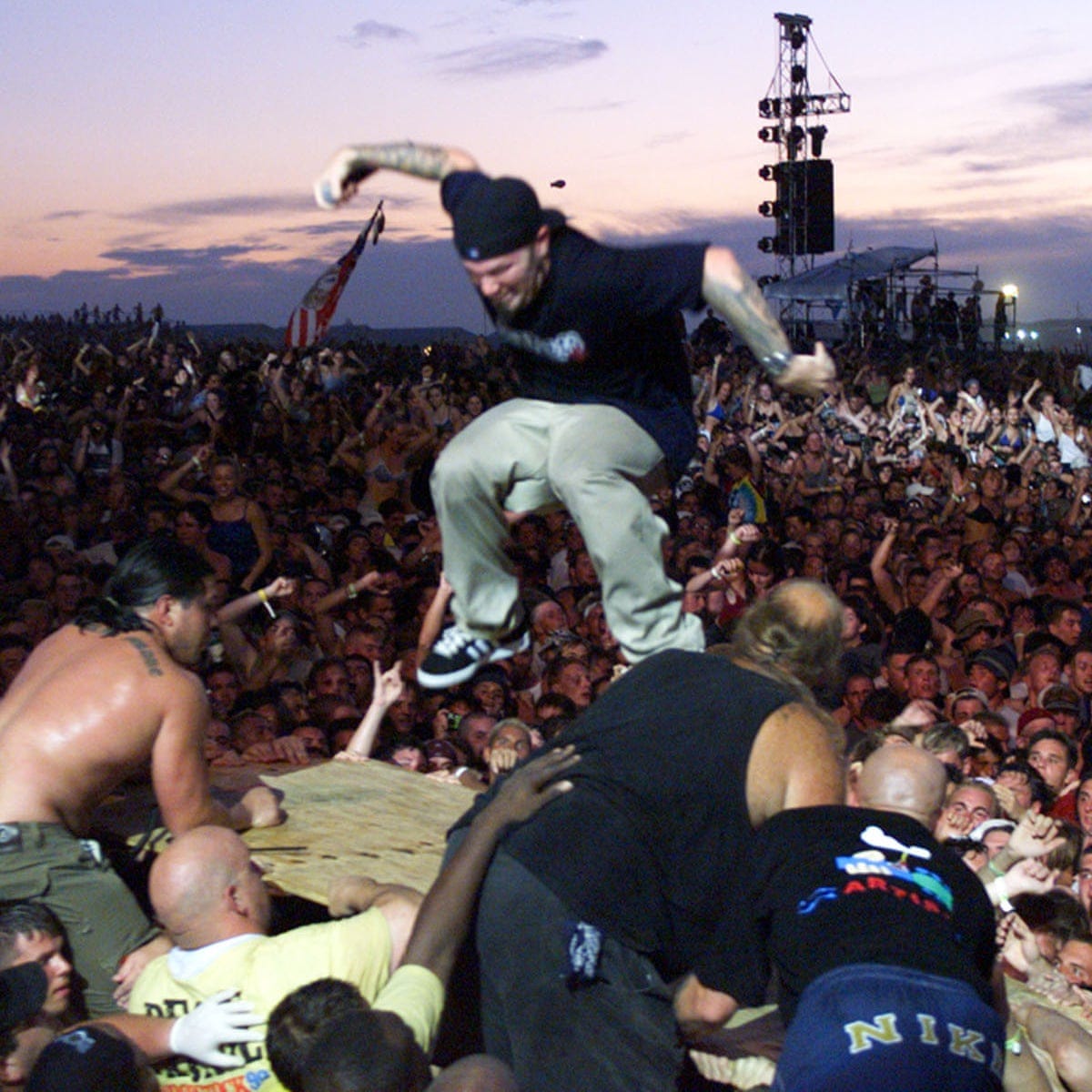
The red flag appears when our ability to move a crowd becomes evidence that God agrees with what we are saying. A charismatic personality can be mistaken for spiritual authority very easily, and once we decide someone is “anointed,” we become much more willing to tolerate behavior from them that we would never tolerate from someone else. Volume, energy, charisma, and emotional impact can all be good qualities in a preacher, but none of them are proof that God has endorsed the message.
6. Performance can look almost identical to spiritual manifestation.
I have had essentially every major Pentecostal experience. I have spoken in tongues, prayed for people, participated in altar services, preached revivals, responded emotionally in worship, and experienced moments that I still consider deeply meaningful. So when I say Pentecostal experiences can become performative, I am not saying it as an outsider mocking something I do not understand. I was part of it.
One of the more uncomfortable realizations of my adult life has been recognizing how much religious behavior we learn from one another. You learn what shouting looks like because you watched people shout. You learn how prophecy sounds because you heard people prophesy. You learn what a Pentecostal preacher sounds like because you grew up listening to Pentecostal preachers. You even learn the cadence and rhythms people use when speaking in tongues because you have spent thousands of hours surrounded by people speaking in tongues.
Human beings imitate one another, and that does not necessarily mean someone is consciously being deceptive. Culture teaches us how to behave. Every church tradition has its own choreography, language, expectations, habits, and cues, even the churches that insist they do not have liturgy. The difficult question for me is knowing where learned religious behavior ends and divine activity begins. I was once very confident about that line. I am not anymore.
7. We became remarkably easy to manipulate.
This is where several of the previous red flags begin stacking on top of one another. If I believe emotional intensity is evidence of God’s presence, if I arrive expecting something dramatic to happen, if I believe the preacher is especially anointed, and if that preacher tells me God has given him a word for the room, I have surrendered an enormous amount of interpretive control before the altar call even begins.
A skilled preacher can use that power, sometimes intentionally and sometimes without even realizing it. I have watched preachers berate congregations for being spiritually dead and then, minutes later, cry while telling them how deeply they love them. I have watched people insult a congregation and then insist the cruelty was actually courage because God told them to say it. The emotional whiplash can become part of the experience, especially when harshness is interpreted as prophetic boldness and tenderness afterward is interpreted as proof that the preacher really does love everyone.
This becomes especially powerful in youth services. Some of the most emotionally intense services I ever experienced happened at youth camps and youth revivals, where large groups of adolescents were placed together in a highly charged environment, separated from normal routines, surrounded by music, preaching, peer response, expectation, and group altar calls. Kids cried, shook, collapsed, spoke in tongues, confessed things, hugged each other, and lay on the floor. Sometimes the responses became even more extreme.
Again, I am not arguing that none of it was real. I am asking what happened afterward. I have known young people who had overwhelming experiences at camp and then struggled spiritually because normal life could never reproduce them. Their local church felt dull, personal prayer felt empty, and reading the Bible alone did not feel anything like lying on the floor surrounded by hundreds of crying teenagers while a worship band played. Many of them concluded they were the problem when perhaps the deeper problem was what we had taught them to expect spirituality to feel like.
8. We learned to chase the “Holy Ghost high.”
Pentecostals themselves use this language. We talked about the “Holy Ghost high,” and we reveled in it. I understand why. There really is something intoxicating about standing in a room where hundreds of people are emotionally synchronized, singing, crying, praying, shouting, embracing one another, and believing together that God is extraordinarily close.
The problem with highs is that eventually you come down. Because intense emotional and euphoric experiences were treated as evidence of spirituality, I found myself needing those experiences for reassurance that God was still there. Over time, I realized I was not alone. Many Pentecostals seemed to live from revival to revival, camp meeting to camp meeting, conference to conference, breakthrough to breakthrough, continually seeking another encounter that would restore the feeling.
Ironically, a spirituality that talked constantly about the nearness of God eventually made God feel far away to me. God was easy to find on Sunday night while the church was shouting. Tuesday afternoon was harder. Pentecostals will quickly say that God is present whether we feel Him or not, and I know because I preached that too. But worship forms us through more than the propositions we affirm. It teaches our bodies and imaginations what to expect, and mine had learned that when God was really close, I would feel it. That eventually became exhausting.
9. We confused having the “full gospel” with having the whole Christian faith.
Pentecostals historically referred to themselves as “full gospel,” and I grew up understanding what that meant. Other Christians believed enough Bible to get saved, but we believed the rest too. We believed in tongues, healing, prophecy, laying hands on the sick, casting out demons, spiritual gifts, and supernatural manifestations. That distinction could easily become a spiritual hierarchy because we had the full gospel while other churches had something less.
We joked about Presbyterians and other liturgical Christians as the “frozen chosen,” and Pentecostal preachers still sometimes caricature liturgical churches as spiritually dead places filled with robes, rituals, organs, written prayers, and people who would not recognize a move of God if one happened right in front of them. I believed versions of that for years.
VIDEO: Pentecostal megachurch pastor Loran Livingston preaches an opinion held by many Pentecostals that liturgical churches are not spiritual and do not provide a spiritual worship experience.
Looking back, one of the things I regret most is how that affected my relationships with other Christians. Growing up, it could actually feel easier to befriend someone who made no claim to Christianity than someone who attended a Presbyterian or Methodist church. At least the non-Christian knew we disagreed. The other Christian confused me because they claimed to know Jesus while rejecting experiences I believed were essential to biblical Christianity. I wonder now how many friendships I missed because I could not recognize another person’s faith unless it looked sufficiently like mine.
Then I finally walked into one of those churches. They prayed, read Scripture, sang spiritual songs, shared testimonies, gave offerings, prayed for the sick, passed the peace, heard the gospel preached, confessed sin, and asked God for forgiveness. It turned out they were Christians worshiping God. I know that sounds embarrassingly obvious now, but it was not obvious to me then.
10. We could mistake spiritual excitement for spiritual formation.
This may be the red flag underneath all the others. Pentecostal worship is extraordinarily good at creating moments, but I now find myself asking whether moments necessarily make disciples. A person can cry at an altar and still be cruel. A person can speak in tongues and still be dishonest. A preacher can fill a sanctuary with emotional energy and still form people poorly. A congregation can have an explosive worship service and still know very little about confession, forgiveness, patience, enemy-love, generosity, humility, or the slow work of becoming like Jesus.
None of those problems is uniquely Pentecostal because every Christian tradition has ways of substituting religious activity for transformation. Ours simply happened to be exciting, and perhaps that made it harder to recognize. My own Pentecostal spiritual life became increasingly centered around finding my purpose, discovering my calling, overcoming whatever battle I was currently fighting, breaking free from whatever was holding me back, getting to another level, receiving another word, experiencing another breakthrough, and believing for another miracle. Something was always about to happen. God was always taking me somewhere. God was always breaking something so He could rebuild it.
Eventually my spiritual life became restless. When my actual life did not align with the theology I had built around my experiences, everything started coming apart. Because experience had become so important to how I understood faith, once my experiences stopped confirming the theology, I did not know what was left to hold onto. I questioned Scripture, Christianity, and eventually whether I believed in God at all.
That is part of what made walking into a Presbyterian church so strange. I came the only way I knew how, expecting. I expected frozen worship, lifeless liturgy, and people going through religious motions because they had long ago forgotten what it meant for God to actually show up. Instead, I found something I did not know I needed. I found anchors.
I found worship that did not require me to manufacture certainty about how I felt. I found prayers I could pray when I did not know what to pray. I found confession that allowed me to be human without turning every failure into another spiritual crisis. I found Scripture read whether anybody felt particularly inspired by it or not. I found doctrine recited together instead of merely hanging on a church wall. I found a form of Christianity that seemed less interested in discovering the next extraordinary thing God wanted me to do and more interested in teaching me how to follow Jesus in the ordinary life I already had.
Oddly enough, I began to feel closer to God, although “feel” may be the wrong word. What really changed was that I began to trust that God was close whether I felt Him or not. There is a difference. I still believe Christianity is mystical. I still believe God is alive and active. I believe prayer matters, that God can surprise us, and that there are moments when awareness of God’s presence overwhelms us emotionally, physically, and spiritually. I am grateful Pentecostalism taught me never to imagine God as dead.
What I no longer believe is that God needs to prove He is alive every Sunday. Perhaps that has been the greatest change in me. I used to need something to happen in order to know God was there. I am learning now that God can be trusted to be present even when nothing happens at all.