

Since joining the Presbyterian church, I have been learning as much as I can about my new denomination. The Presbyterian Church is a Calvinist church. I know… cringe. Me too. But I am learning that many of my big feelings about Calvinism may have emerged in ignorance, so I am taking my time and trying to understand John Calvin and his church better. It has been humbling to learn how much I don’t know about Reformed theology.
I was born into the Pentecostal church. Pentecostals are restorationists and believe they have recovered the power and authority of the first century church as described Acts 2, which had been lost by every other church tradition, Protestant and Catholic, between their time and the time of the apostles. How did the church lose it? By becoming too religious and too dependent on man-made creeds and confessions.
When I sat in my Church History class at Lee University, I felt like I was learning about a completely different civilization. Most of it happened in Europe, ended up being apostate, and didn’t matter because I was in the full-gospel church where God literally showed up to our church services. I wish I could say that I took time in seminary to think differently, but I didn’t. Even though I was at a Baptist Divinity School with amazing history and theology teachers, I still heard it as someone else’s story, not mine. So it feels a little like I am learning about the Christian faith for the first time. Before diving into the depths of Calvin, I am starting with the Five Solas of the Reformation.
Sola Scriptura, Nuda Scriptura, and Biblicism
First up, the doctrine of sola scriptura, or “Scripture alone.” I have had a tense relationship with the Bible over the years and have written about it on this blog. What I am coming to understand is that a lot of my problems with the Bible, particularly beliefs about its divine inspiration and inerrancy, are more about how I was taught to interpret the Bible as a Pentecostal and less about the Bible itself. Which makes sense, because I have always loved the Bible! I read it, meditate on it, I try to live my life following it. Anytime I write about faith or spirituality, I reference Scripture and draw from it.
Pentecostals believe in verbal inspiration and claim to have a very high view of Scripture. So high, in fact, that sometimes it feels like the Bible is a fourth part of the Trinity, or quaternity. This is because Pentecostals treat the Bible as a plain, self-interpreting, exhaustive handbook for all of life, directly accessible to any sincere reader without the mediation of tradition, community, or trained teachers. This is biblicism. This is not what the Reformers meant when they said “Scripture alone.”
The Reformers held that Scripture is the supreme and final authority; divinely inspired, fully authoritative, but always read within the church, accountable to creedal tradition, and interpreted by trained ministers in community. The Bible is not self-interpreting in the biblicist sense. It requires the work of the whole church across time to read faithfully. The Westminster Confession’s doctrine of Scripture is robust and high, but it is embedded in 32 other chapters of collectively discerned doctrine, which is the opposite of the biblicist posture.
The Pentecostal trend toward biblicism is epistemological. Since Pentecostals believed they are a modern restoration of the first century church, the first Pentecostals were non-creedal and held that the New Testament was the only rule for faith and practice. This is not sola scriptura. This is nuda scriptura. Even though they produced their own confessions within half a century of emerging on the scene, that root of non-creedalism keeps bearing fruit.
The fruit looks like this: their doctrines and Scripture become inseparable. To question one is to question the other. Because their doctrines are not mere man-made creeds, they are the plain teachings of an infallible, divinely inspired Bible. The Bible is not informing their tradition. Their tradition is the Bible.
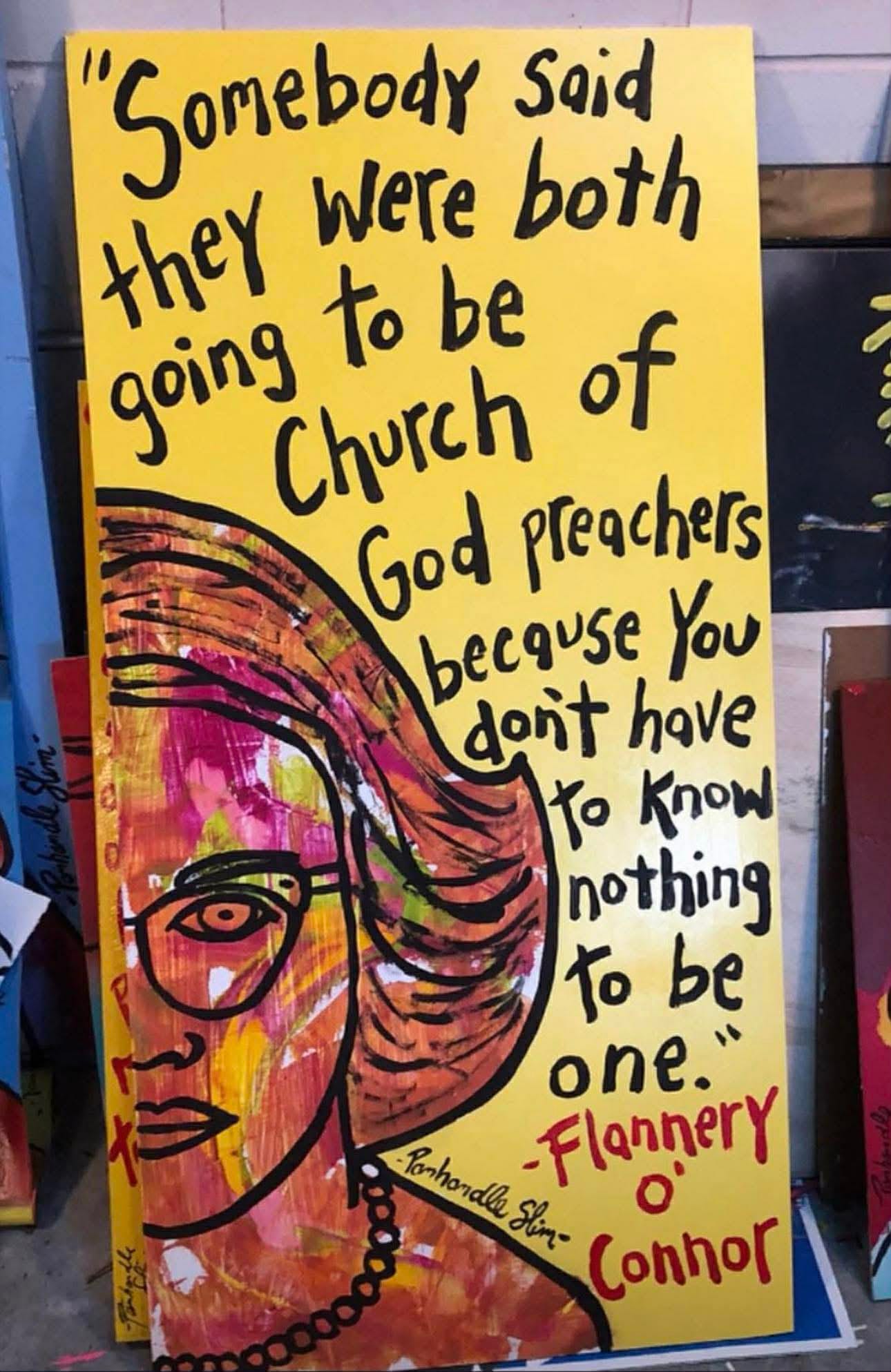
I am not saying this makes any of their doctrines heretical necessarily. What I am saying is that their doctrines emerged in a biblicist, sectarian environment rather than a catholic* one. This is why you will often hear Pentecostals talk about their “distinctives.” Sectarian churches always define themselves by their boundaries; what makes them different from everyone else. Catholic churches define themselves around a center of shared beliefs.
*Cathoilic here does not refer to Roman Catholicism, but the universal Christian church.
Nuda Scriptura is a method of biblical interpretation disconnected from the whole of Christian theology and tradition, even when it intersects with historic catholic doctrine at points. The doctrines it tends to produce are peripheral to historic Christianity rather than central to it — speaking in tongues as initial evidence of Spirit baptism, premillennialism, non-trinitarianism, entire sanctification as a second definite work, divine healing in the atonement, and various purity codes governing dress and behavior. None of these are among the things the church across time and tradition has agreed are essential. They are the distinctives of a particular sectarian stream, not the inheritance of the whole church.
In practice many Pentecostals are biblicists about doctrine and charismatics about experience, and the two never fully reconcile. This is partly why Pentecostal movements are so vulnerable to authoritarian leadership. The doctrine of inspired present speech, unaccountable to creedal tradition, creates enormous space for a charismatic leader’s words to function as divine authority.
What I experienced as a Pentecostal was a sort of doctrinal dissonance, especially in relation to the Bible. Because Pentecostals still believe in prophets and apostles, and that God still speaks to the church through tongues and interpretation and gifts of prophecy, beliefs emerged as though they were doctrine even though there was no statement of faith, discerned by the body, and published for the church. Things like dispensationalism, the anointing, and prosperity gospel teachings about tithing and giving are mostly the gospel truth to Pentecostals even though they aren’t always found in their doctrinal statements. In practice many Pentecostals are biblicists about doctrine and charismatics about experience, and the two never fully reconcile. This is partly why Pentecostal movements are so vulnerable to authoritarian leadership. The doctrine of inspired present speech, unaccountable to creedal tradition, creates enormous space for a charismatic leader’s words to function as divine authority.
Where that Leaves Me
I have not arrived anywhere. I am still working this out.
But I can say that studying the Reformers’ understanding of sola scriptura has done something unexpected: it has given me back the Bible. Not as an inerrant textbook or a magic answer book or a fourth member of the Godhead. As the church’s book, it is the text that the community of faith has been reading together for two thousand years, arguing over, confessing together, and being formed by.
The lectionary we follow in the Presbyterian church is part of this. Every week the text is assigned. The preacher does not get to choose what is convenient or familiar. The whole sweep of Scripture moves through the congregation over three years whether it is comfortable or not. I spent years in churches where the preacher circled the same pet texts week after week, and I did not have language for why that bothered me. Now I do. Without accountability to the whole text, the pulpit becomes a platform for whatever the pastor already believes. The Bible is invoked but it is not really in charge.
That is the difference between sola scriptura and nuda scriptura in practice. One situates the reader inside a community that has been reading this text for two thousand years and takes that history seriously. The other hands the reader the text and wishes them luck.
I spent a long time thinking I had a Bible problem. I had a hermeneutics problem. And the tradition I thought had nothing to teach me turned out to have been working on that problem for five hundred years.
Getting a contented biblical view of biblical inspiration,f rom one’s conversion in (perhaps) one’s teens, to mature adulthood after much reflection, can be a long and changing journey, without reducing one’s love of scripture of intended or attempted submission to it.
When a child is born it reorients its parents and the world towards its vulnerability. That is a vocation and it decentralizes authority. The parents say that is love. God is love. When one looks at the world it offers centralized top down authority structures that take the form of politics, religion and wealth. These two types of kingdoms are structurally incompatible and are in tension with one another. Each child arriving creates a fracture in loyalty to hierarchy or kingship. The next child does the same, then another and another and so on.
An absolute kingship always fears the child first born and so attempts to suppress it, enlist it, or silence it to protect itself and avoid the fracture. And as best it can do that, the next child born still creates a new fracture.
In the story of Jesus he tells people to be like the child, be reborn, give up the life you have, do not harm the child and so on. People often have turned the message about the child into sentimental innocence ignoring structurally what the child did to the world just by arriving.
His story presents the two types of kingdoms, one visible in the world we can all see easily and one that is unseen by close at hand.
Hierarchy has its place for it distributes provisions that are necessaries of life, but it can drift if not restrained. Church systems are not about doctrines or rituals, but a place where each person is permitted to live out the vocation they had from birth. To be themselves. This idea of sanctuary isn't limited to religious systems either, as it can appear in many forms and so the arrival isn't decided by Pentecostals or Catholics or whoever. What helps one may hinder another.
Pentecost is the time when many who spoke different languages, now could speak to one another with one common language. It wasn't about speaking in tongues or bringing about an ordered structure, it was always about the vocation of the child. That is the common language that disrupts kingship and so is the model of the church.
You might have thought you were required to forgive others as a command, but it really is a consequence. When you see a person living for hierarchy the probably do not see the other kingdom, so you forgive them for serving the wrong one. It might be, in life, they have no option at the moment like the roman centurion.
Faith is the assurance of things hoped for, the conviction of things not seen.